Chapter 1: Sirtuins
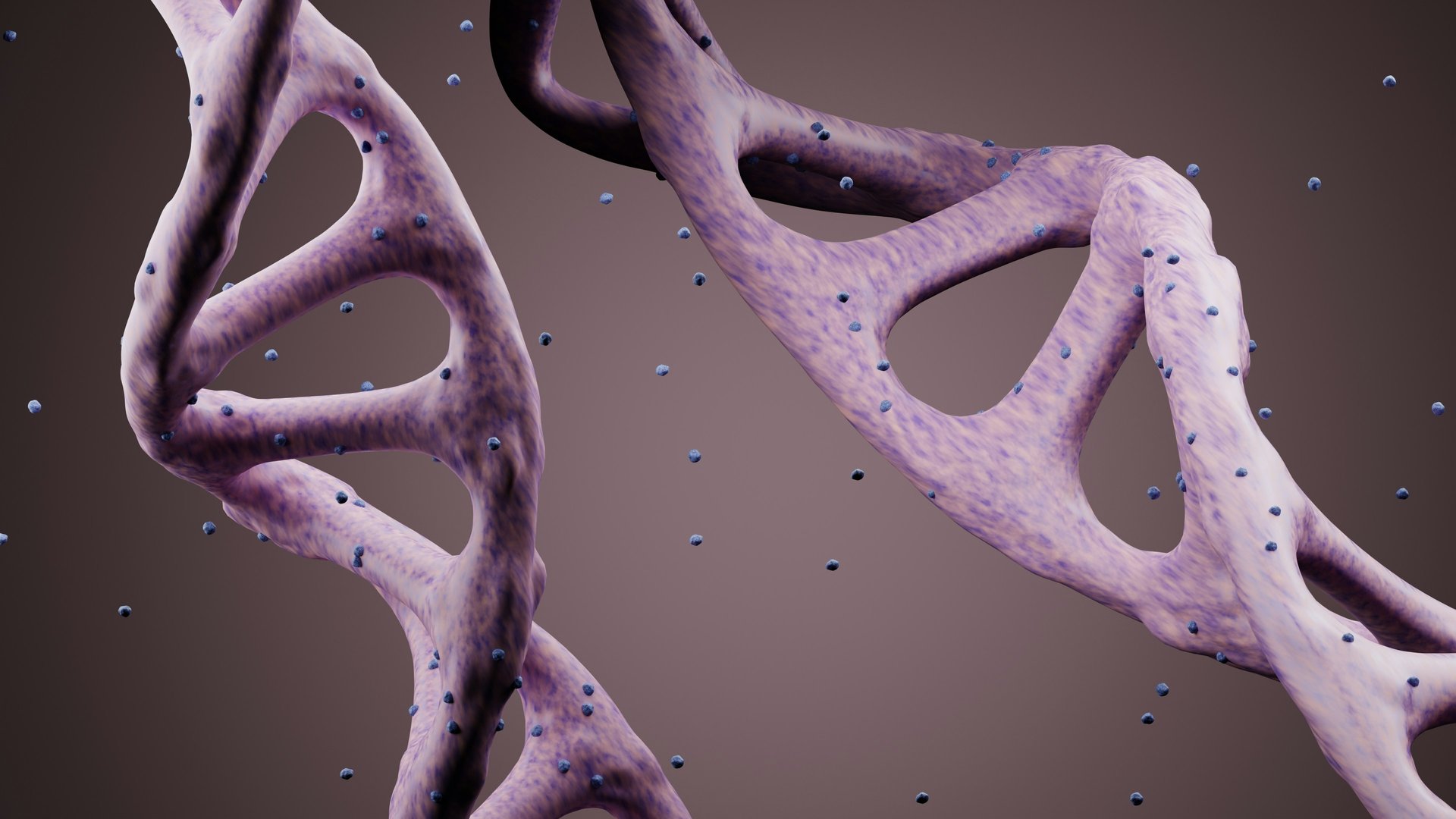
Meet Sirtuins: a family of seven master proteins (SIRT1 through SIRT7) that act as your cell's dedicated internal repair crew.
From repairing DNA damage caused by UV and environmental stressors to mitigating the inflammaging cascade and supporting metabolic health, sirtuins are a key focus in modern longevity science.
In our preclinical in vitro testing, OCEANBOOST™ FG demonstrated the ability to restore SIRT1 expression under acute stress to levels comparable to Resveratrol, the Longevity Industry's benchmark for performance.
But there is a major catch: sirtuins are co-dependent and cannot perform any of these tasks on their own.
If you've heard of sirtuins, then you've probably heard a lot about NAD+, and you guessed it, NAD+ is sirtuins' crutch; without it, they cannot operate.
Chapter 2: NAD+
Is boosting NAD+ actually missing half the picture?
NAD+ has taken the wellness world by storm, and for good reason. Beyond fueling cellular energy and genomic stability pathways, it is the vital fuel required to activate sirtuins, our cell's master repair proteins.
While flooding the body with precursors might seem like a logical way to boost NAD+ levels, there is a key part of this mechanism we need to consider.
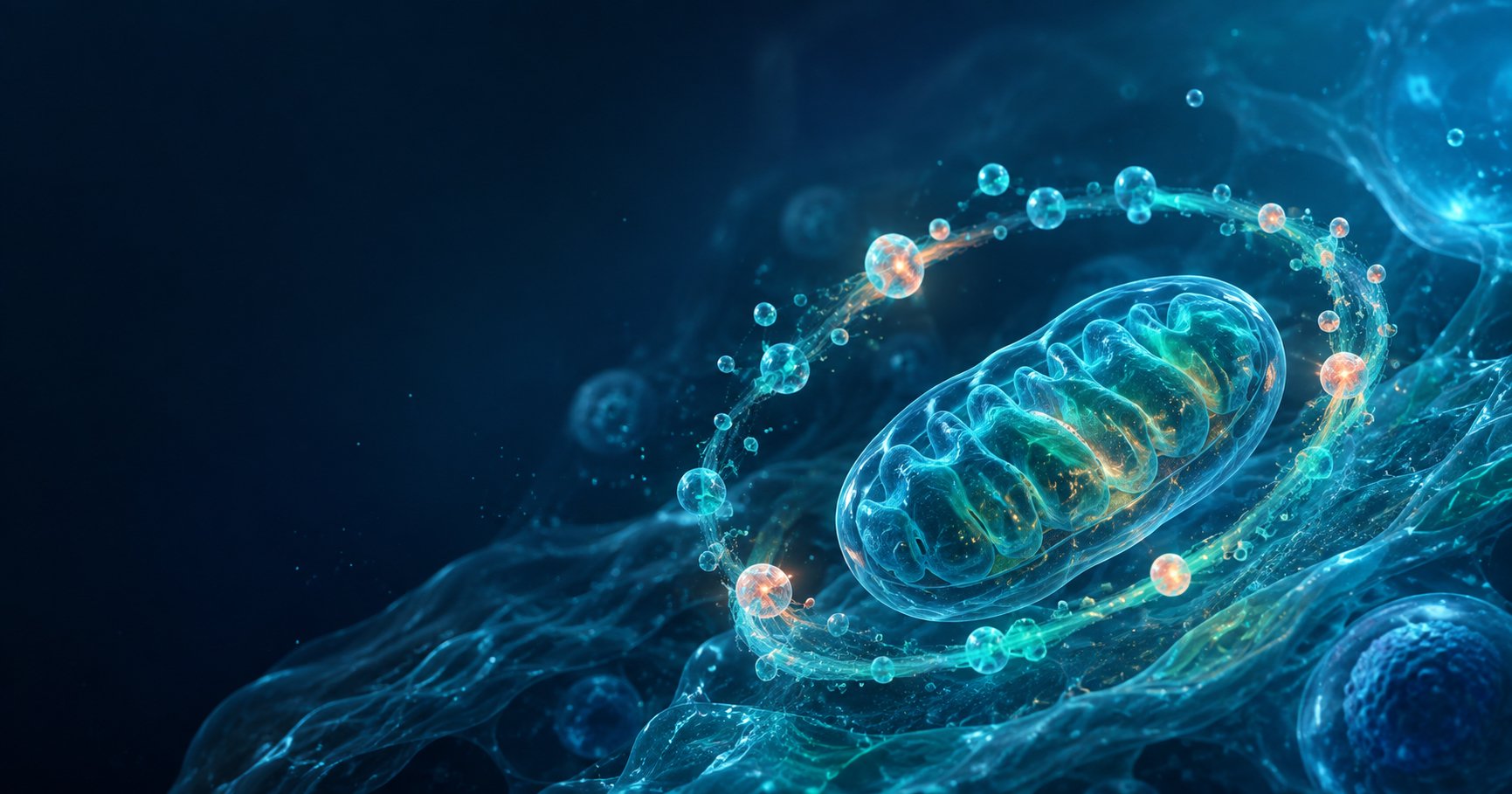
Inside cells, NAD+ constantly flips between two states: active NAD+ (oxidized) and NADH (reduced). As your cells produce energy, NAD+ picks up electrons to become NADH, then drops them off in the mitochondria (your cell’s powerhouses) to generate ATP before recycling back. Sirtuins are co-dependent on NAD+ to function. Under oxidative stress, this recycling system breaks down; NADH accumulates and blocks sirtuins activity.
This balance is called the NAD+/NADH redox ratio. While precursors focus on adding more fuel to the tank, protecting this balance suggests a more biomimetic approach: supporting the cell's natural capacity to keep its existing fuel circulating and usable when stress hits.
In our preclinical in vitro testing, OCEANBOOST™ FG sustained this ratio under acute stress, successfully restoring the redox balance and SIRT1 expression back to healthy baseline levels.
Chapter 3: Mitochondrial Biogenesis
PARP-NAD+-SIRT1-PGC1α: alphabet soup, a math equation, or a driver of primary cellular energy?
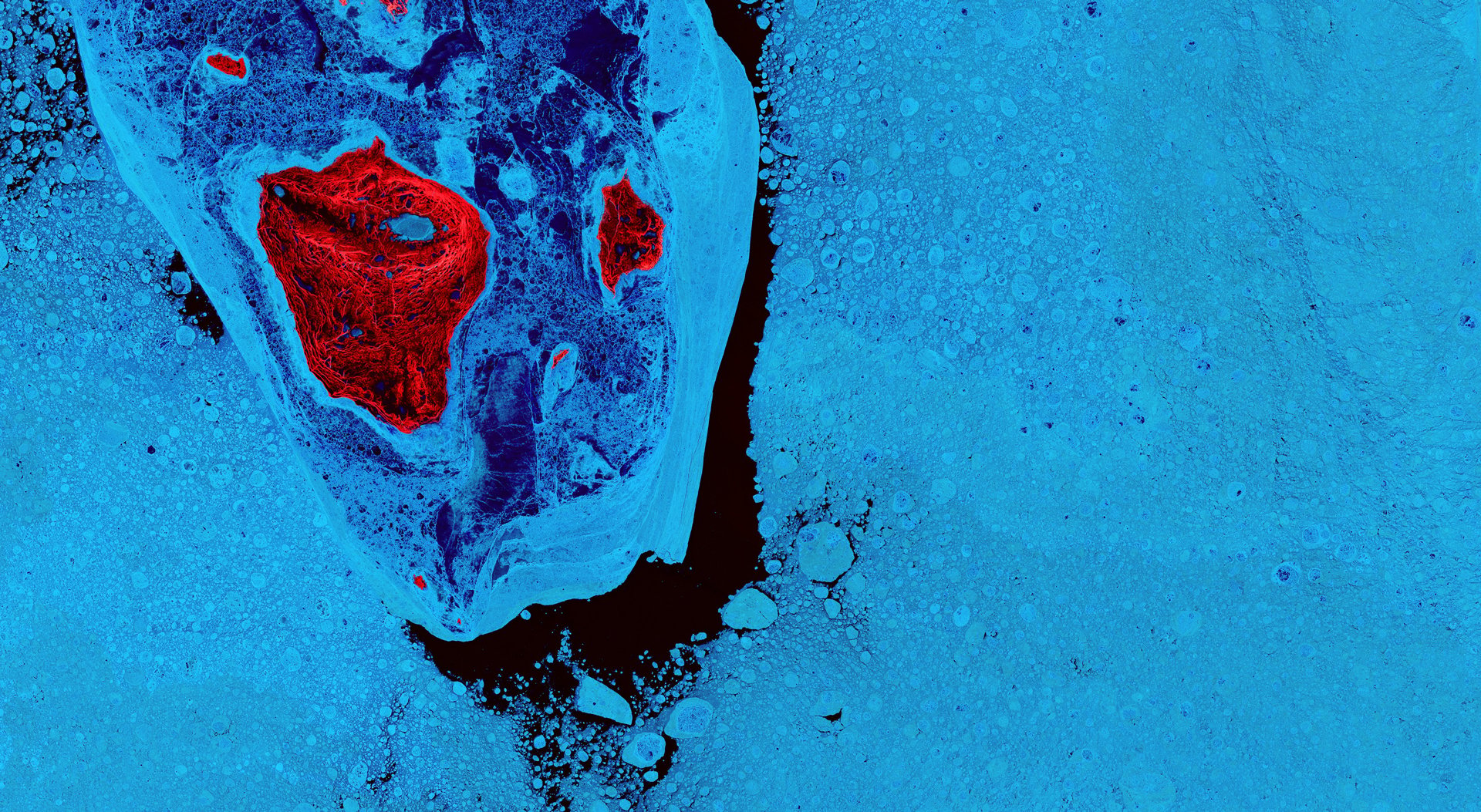
In longevity science, this axis describes the biochemical chain reaction that defines how your cells build new mitochondria, the internal powerhouses that naturally become damaged under stress.
When cellular damage occurs, a first-responder enzyme called PARP hyperactivates to patch up acute DNA damage. But PARP is a massive fuel hog: its emergency repair work rapidly drains the cell's NAD+ pool, in turn starving sirtuins, our longevity maintenance and stability proteins. The catch: without active SIRT1, cells cannot activate the PPARGC1A gene, which encodes the PGC-1α protein that signals the cell to build new mitochondria.
If PARP drains the fuel, the entire relay stops. Unable to renew their energy centers, damaged cells become non-functional senescent "zombie cells", secreting inflammatory cytokines that that drive the inflammaging cascade.
In our preclinical in vitro testing under acute oxidative stress, OCEANBOOST™ FG effectively reversed this decline, upregulating PPARGC1A expression back to baseline levels. By stabilizing this signal alongside NAD+ redox balance and SIRT1 activity, OCEANBOOST™ FG effectively protects every stage of this longevity axis.
True cellular energy is not just about forcing old machinery to work harder; it is about protecting the biochemical chain reaction that powers us from within.
Chapter 4: Zombie Cells
What if one of the primary drivers of cellular aging isn't dead cells, but cells that refuse to die?
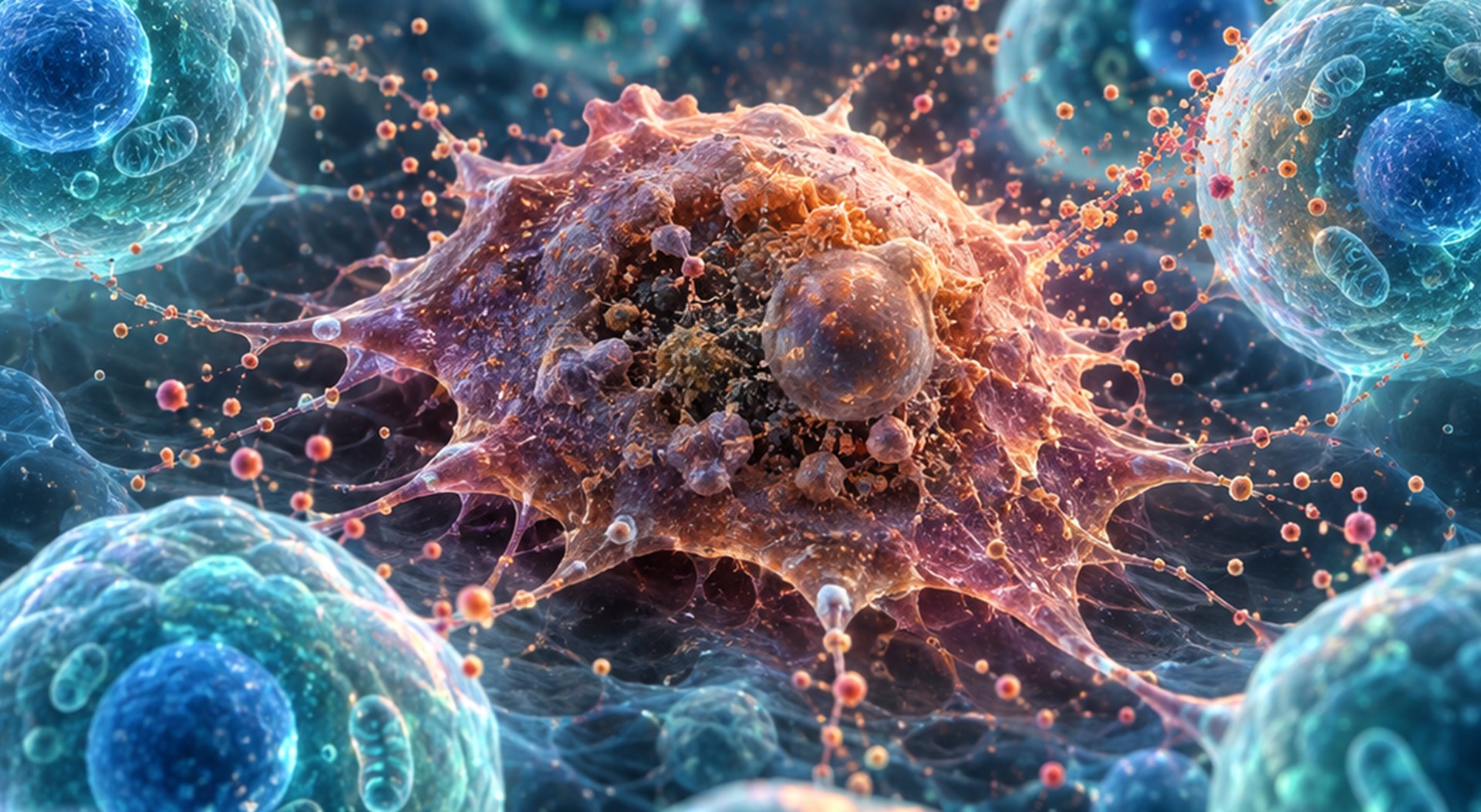
In longevity science, these are called senescent cells—or more colloquially, "zombie cells."
When cells experience severe oxidative stress, they can enter permanent arrest. They stop dividing and stop generating energy, but instead of dying off cleanly, they linger. Worse, they secrete a toxic cocktail of inflammatory cytokines that corrupts neighboring healthy cells, driving systemic inflammaging.
In our preclinical in vitro testing, OCEANBOOST™ FG showcased strong senomorphic activity, outperforming Resveratrol, the reference compound in today's longevity science.
It achieved an unprecedented 80–85% reduction in senescent cells, nearly doubling the efficacy of the standard. This potent senomorphic ability helps prevent healthy cells from entering a permanent, inflammatory senescent state.

Chapter 5: Extracellular Matrix Integrity
While collagen boosting and supplementation are cornerstones of current anti-aging strategies, protecting native collagen from degradation is a hallmark of longevity science.
The wellness industry remains fixated on forcing collagen synthesis to rejuvenate skin and tissue. However, signaling cells to produce more structural proteins is futile if acute stress is actively degrading your existing matrix.
When exposed to stress, inflammatory pathways activate an upstream transcription factor called AP-1. This unleashes Matrix Metalloproteinases (MMPs), destructive enzymes that break down collagen, one of the primary structural proteins holding the extracellular matrix together.
In our preclinical in vitro testing, OCEANBOOST™ FG demonstrated a multi-pathway defense system against matrix breakdown:
-
Upstream Interception (Immune Modulation): Inhibits AP-1 transcriptional activity in macrophages, intercepting the inflammatory cascade at the source before MMP production surges.
-
Direct MMP1 Suppression (Dermal Protection): At 1.0 mg/mL, it significantly reduces downstream MMP1 expression in dermal fibroblasts under severe oxidative stress, delivering matrix protection comparable to Resveratrol.
-
Matrix Preservation: By halting this cascade, OCEANBOOST™ FG successfully maintains higher COL1A1 expression levels in fibroblasts, preserving structural tissue integrity.
Whether as a standalone ECM protector or a complementary partner to precursors and signaling peptides, protecting native matrix integrity completes your longevity formulation.
To find out more, download the Fact Sheet below, or contact us to book an introduction to discuss how OCEANBOOST™ FG can become a cornerstone in your next functional food or supplement formulation.
Interested in learning more?
Our Product Development Activist Marc Desmarais joined the the fourth Cosmetics Business Roundtable event that explored Healthy Ageing & Skin Science: The Innovations Driving Longevity.